We tend to treat monogamy as the default and polygamy as the deviation. But if you look at human sexuality through an evolutionary lens, the picture gets considerably messier.
We can’t talk about polygamy without talking about the elephant in the room: sex.
Sex is strange. We don’t actually spend that much time doing it, yet an extraordinary amount of human behavior revolves around it. Parties, dinners, nightlife, creative pursuits, flirting, dating, and even marriage all seem, in one way or another, to lead back to sex.
And despite how little time we spend having sex, its consequences are enormous.
Marriage, children and family follow from it. So do jealousy, heartbreak, romance, much of art, music and literature. If humans were creatures that reproduced without sex, almost everything about our society would look different.
But sex itself is a strange thing from an evolutionary perspective.
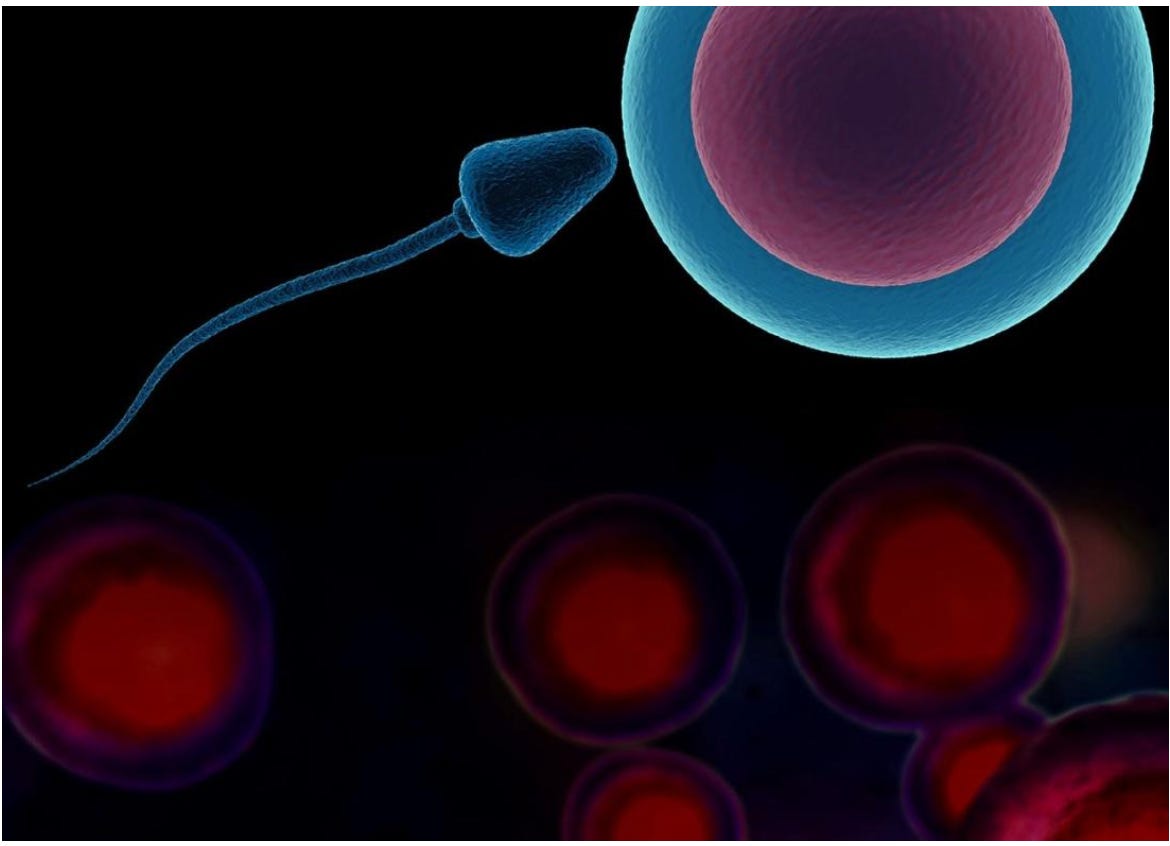
There are organisms that reproduce by essentially cloning themselves. So why reproduce sexually when cloning would allow an organism to pass on 100% of its genes? From a purely genetic perspective, sexual reproduction seems inefficient. If I cloned myself, my offspring would receive all of my genes. Instead, my children receive roughly half from me and half from their mother.
But that's not the puzzle I want to solve.
I want to understand what the difference between males and females tells us about our mating behavior and ultimately, whether that makes men polygamous.
What is the difference between males and females?
Don’t even think penis and vagina. There are plenty of animals that have neither.
The fundamental difference is actually in our reproductive cells. Males produce small sex cells called sperm. Females produce much larger sex cells called eggs. Because eggs take more energy to produce, females generally invest more in reproduction.
So if males produce smaller sex cells and females produce larger ones, why is it that in so many animal species, males are physically larger and more aggressive?
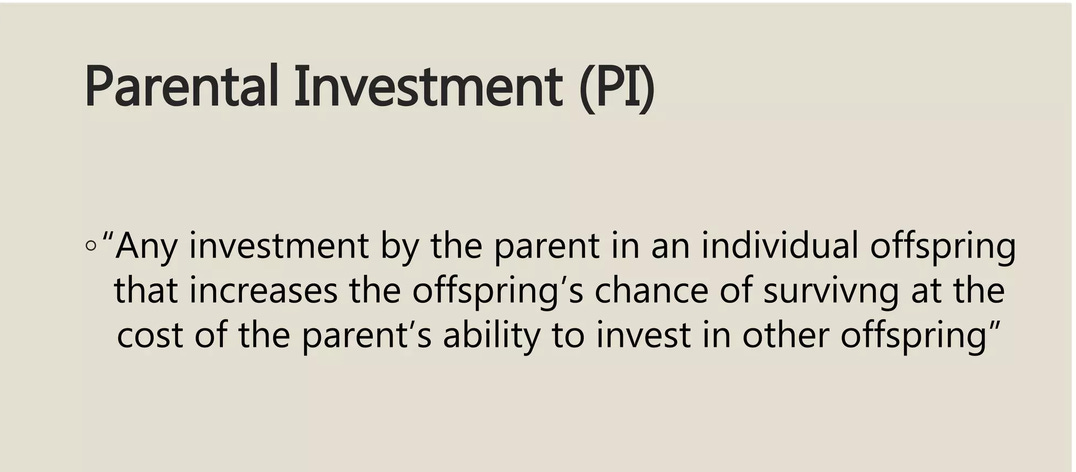
The answer lies partly in what Robert Trivers called parental investment: any investment that increases an offspring’s chances of survival at the expense of the parent’s ability to invest in other offspring.
Consider the difference.
A male can potentially reproduce with several females in a short period of time. A female can’t simply have ten pregnancies simultaneously. Each child represents a much larger biological investment.
And this asymmetry has consequences.
A male can potentially increase his reproductive success by mating with more females. This creates competition between males for access to females.
Females, on the other hand, have more reason to be selective about their partners. Since reproduction is more costly for them, choosing the right mate matters.
This helps explain why, across the animal kingdom, males are often more aggressive, competitive and physically elaborate. They develop weapons for fighting other males or displays for attracting females.
So, are men naturally polygamous?
Perhaps the answer is somewhere in between. Humans are complicated.

The evolutionary logic gives men a potential reproductive advantage from having multiple sexual partners. A man can, at least theoretically, father many children with different women in a relatively short period.
But that doesn't mean men are simply programmed to sleep with as many women as possible.
Humans don’t just have sex.
We form attachments.
We fall in love.
We raise children together.
We cooperate.
We become jealous.
We build families.
And these things matter because humans are unusual animals. Our children are exceptionally dependent on adults for a long time, which makes cooperation between parents valuable.
So saying "men are naturally polygamous" is probably too simplistic.
We are relatively polygamous and serially monogamous. We form pair bonds, but we also have the capacity, and in some cases the desire, for multiple partners.
Evolution gives us tendencies, not instructions.
Culture, morality, personality, circumstances and individual choices all shape what we actually do with those tendencies.
And that is perhaps the more interesting conclusion.
Maybe the question isn’t whether humans are monogamous or polygamous.
Maybe we’re a little bit of both.
But that’s only one way of looking at it. Evolutionary psychology can offer useful explanations for some of our tendencies, but it doesn’t explain everything about human relationships.
So I’m open to other interpretations, evidence and disagreement.
What do you think?
If you enjoyed this, leave a comment and tell me where you agree or disagree. And if you found it interesting, consider subscribing for more essays like this.
Subscribe to my Substack to get new posts as I write them.
Originally published on Substack.